
PCR No Bands on Gel? 10 Causes and Fixes That Work
Empty lanes on a gel are every molecular biologist's nightmare. Here is a systematic way to find the culprit — and fix it.
Quick answer
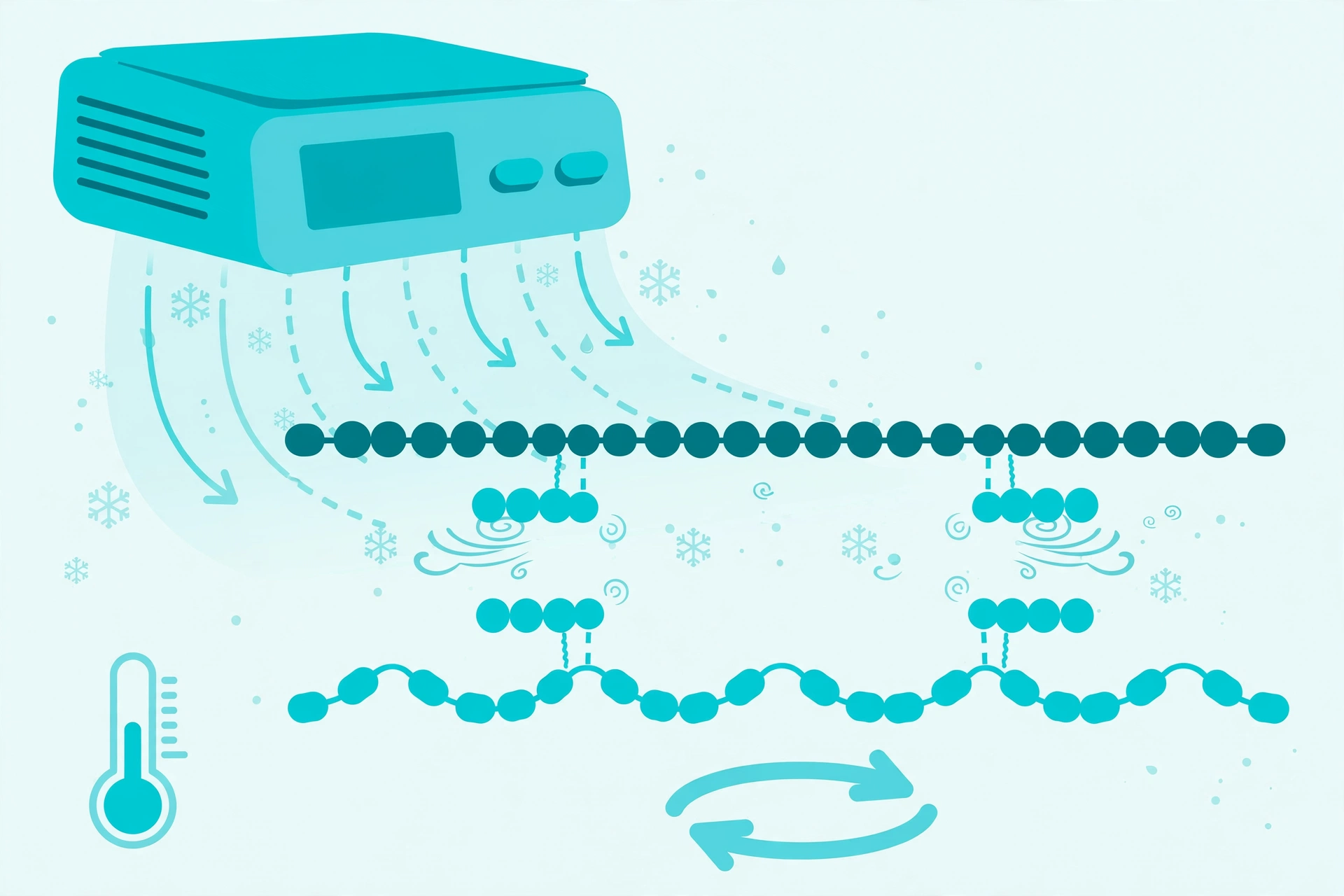
No bands on a PCR gel means nothing amplified. The most common causes are degraded or wrongly diluted primers, an annealing temperature set too high, poor template DNA, or inactive polymerase. Run a positive control first — if it also fails, a shared reagent is dead; if it works, the problem is your primers or template.
What Does "No Bands" Actually Tell You?
We've all been there — late on a Friday, you slide the gel into the documentation system and… nothing. Empty lanes staring back at you. Before you panic, read the gel like a diagnostic.
Ladder visible, samples empty: your gel, buffer, and stain all worked. The failure is in the PCR reaction itself — primers, template, polymerase, or cycling conditions.
Ladder missing too: the problem might not be PCR at all. Check the electrophoresis setup — wrong electrode polarity or degraded stain will give you a blank image even with a perfect reaction.
What Are the 10 Most Common Causes of No Bands in PCR?
Here is the full lineup, in the order I'd check them. Seven times out of ten it's one of the first three.
| Cause | How to check | Fix |
|---|---|---|
| Annealing temperature too high | Compare setting to primer Tm | Drop to Tm − 5 °C; run a gradient |
| Degraded primers | Check age and storage | Order fresh; store at −20 °C |
| Wrong primer concentration | Recheck dilution math | Use 0.2–0.5 µM final per primer |
| Poor template quality | Check A260/280 ratio | Re-extract; dilute inhibitors 1:10 |
| Too little (or too much) template | Quantify accurately | 1 ng plasmid; 10–40 ng cDNA; ≤1 µg genomic |
| Inactive polymerase | Positive control fails too | Fresh aliquot; keep Taq frozen |
| Degraded dNTPs | Old stock, many thaws | Replace; aliquot to avoid thawing |
| Mg²⁺ concentration wrong | Titrate 1.5–3.0 mM | Test 1.5, 2.0, 2.5, 3.0 mM |
| Extension time too short | Check amplicon size | 1 min per kb (30 sec/kb fast enzymes) |
| Thermal cycler problem | Block not reaching temps | Run control on another machine |
Could Your Primers Be the Problem?
Primers are suspect number one. Three primer failures cause a huge share of "no bands" cases:
First, the dilution math. One misplaced decimal and your "0.5 µM" reaction contains 0.05 µM — too little to amplify anything. Our primer dilution guide walks through the exact math.
Second, degradation. Years at −20 °C with dozens of freeze–thaw cycles will chew up the 3′ ends — and polymerase needs an intact 3′ end to extend. If your primers are ancient, just order fresh ones.
Third, design and Tm. A Tm below ~55 °C or a mismatch to your actual template sequence can silently kill a reaction. Verify with our Tm calculator and primer design guide.
Is Your Annealing Temperature Too High?
This is the single most common cycling mistake behind empty lanes. Here's the thing: set the annealing temperature above the primers' melting temperature (Tm), and most primers simply never bind the template. No binding, no extension, no bands.
The safe starting point is 5 °C below the lower of your two primer Tm values — so a primer pair melting at 60 °C and 58 °C starts at 53 °C. Our annealing temperature guide covers the full logic.
If you're unsure, run a gradient PCR — most cyclers test 8–12 annealing temperatures in one run. Span from 10 °C below to 2 °C above your Tm, and you'll see exactly where amplification kicks in.
What About the Template and Reagents?
Degraded template or leftover extraction inhibitors (phenol, ethanol, EDTA) will give you nothing — check the A260/280 ratio (pure DNA ≈ 1.8) and try diluting the template 1:10. And always run a positive control: if it works, your polymerase is innocent; if it's also blank, open fresh aliquots of enzyme, dNTPs, and buffer.
When Should You Redesign Primers Instead of Optimizing?
Honestly, most people optimize too long and redesign too late. If a gradient PCR, fresh dilutions, and new template still give nothing after two or three attempts — stop tweaking and redesign. Synthesis takes two days and costs pocket change.
Redesign is especially warranted when primers have a Tm under 55 °C, when BLAST shows multiple template matches, or when the amplicon coordinates were wrong. Old primers giving primer dimers instead of product? Same story — a design problem. See the primer design guide, and run every new pair through the Tm calculator before ordering.
Key takeaways
- Ladder visible but samples empty? The PCR failed, not the gel. Missing ladder? Check the electrophoresis setup.
- Check primers and annealing temperature first — they cause most "no bands" cases. Start at 5 °C below the lower primer Tm.
- Always run a positive control: it tells you instantly whether a shared reagent is dead.
- A gradient PCR finds the working annealing temperature in one run.
- After two or three failed optimization attempts, redesign the primers instead of tweaking forever.
Frequently Asked Questions
My DNA ladder shows up but my samples don't — what does that mean?
Your gel and stain worked, so the problem is in the PCR itself. Focus on primers, annealing temperature, template quality, and polymerase activity — in that order.
Can old primers cause no bands in PCR?
Yes. Badly stored or ancient primers degrade, especially after repeated freeze–thaw cycles. If everything else checks out, order a fresh synthesis — it's cheap and often fixes things immediately.
What annealing temperature should I try first?
Start at 5 °C below the lower of your two primer Tm values. Still nothing? Run a gradient PCR from 10 °C below to 2 °C above the calculated Tm.
How do I know if my Taq polymerase is dead?
Run a positive control with primers and template that worked before. If the control is also blank, the enzyme — or another shared reagent — is dead. Open a fresh aliquot.
Still stuck? See Sigma-Aldrich's PCR troubleshooting guide and BiteSizeBio's PCR optimization tips. Then verify your primers with our free Tm calculator before the next run.