
Why Are My PCR Bands Faint? Causes & Fixes
A faint band is PCR's least helpful result — not a clean failure, just a maybe. Here's how to tell whether the reaction or the gel is to blame, and fix it in order.
Quick answer
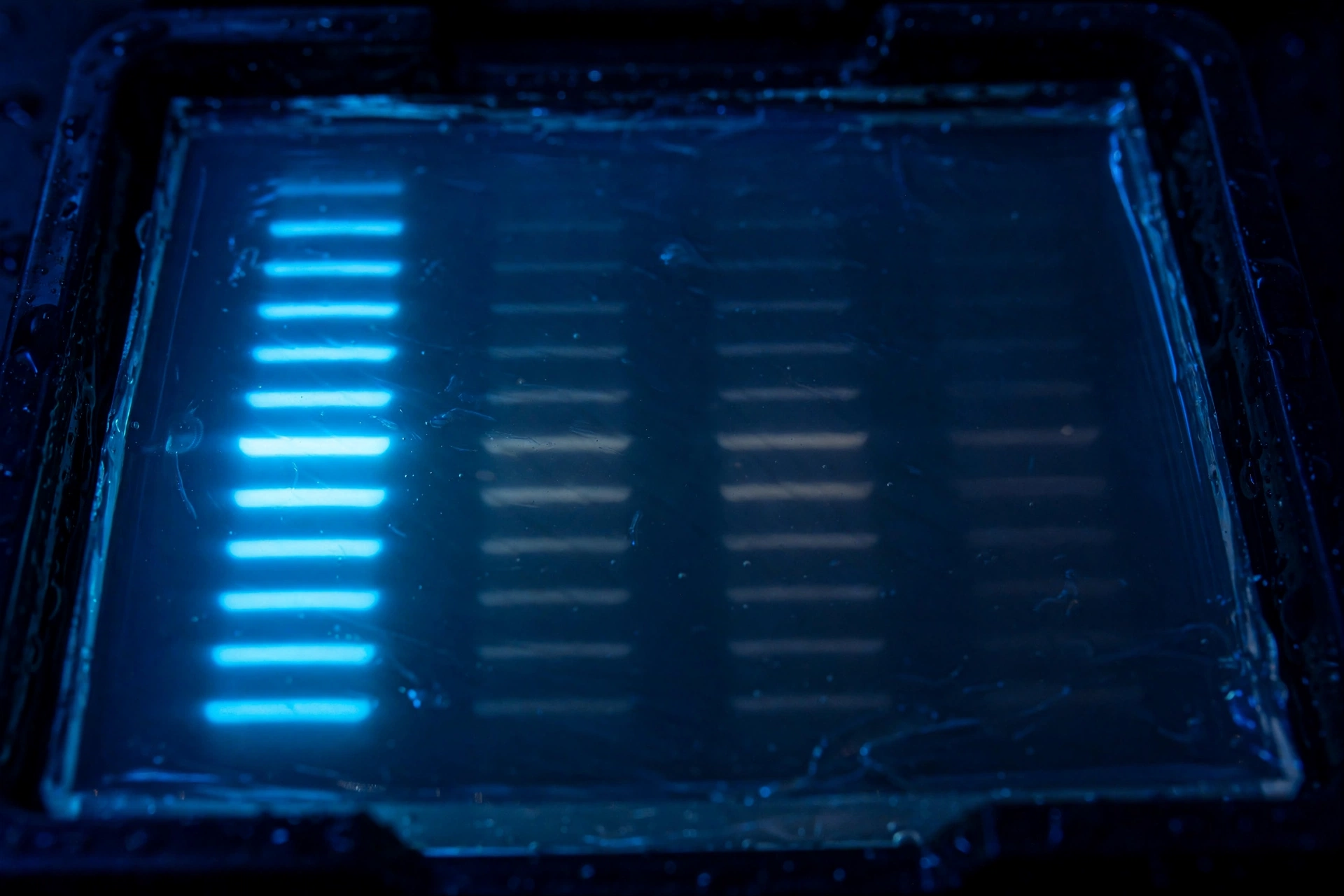
Faint PCR bands mean the reaction made too little product — or the gel can't show what it made. First, check the ladder: if it's bright, your PCR is the problem (low template, old primers, too few cycles). If everything's dim, it's the gel (too little DNA loaded, weak stain, UV fade). Work through the fixes below in order.
Why are my PCR bands faint? This question lands in lab forums every week, usually late on a Friday afternoon: "Gel's done. Bands are there, technically — but they're so faint I have to squint." I've been the person squinting. The good news: faint bands are genuinely diagnostic. Read them right and they point straight at the cause.
Is It the PCR or the Gel? The One Check That Halves the Work
Before touching a single reagent, look at your ladder lane. One glance splits the whole problem in two:
| What you see | What it means | Where to look |
|---|---|---|
| Ladder bright, samples faint | Gel, stain, and camera all work | Your PCR reaction — low yield |
| Everything faint, ladder included | DNA isn't being visualized | Your gel setup — loading, staining, imaging |
| Only bottom bands faint | Stain drained from the lower gel during the run | Staining — stain the running buffer too |
| Bands faded while photographing | UV bleached the signal | Imaging — shoot faster |
No guide tells you to do this first. A glowing ladder proves loading, staining, and the camera all work — the problem lives in the tube, not the gel. Half your suspects, gone in one glance.
Why Your PCR Didn't Make Enough DNA
Bright ladder, ghost bands: the reaction underperformed. Ranked by how often each is the real culprit:
Too little template. The classic. Aim for 10–50 ng genomic DNA per 50 µL reaction (1–10 ng for plasmid). Below that, the reaction starves (too much can inhibit the polymerase, though — there's a sweet spot).
Degraded primers. Primers left warm or freeze-thawed a dozen times lose binding efficiency silently — the PCR still runs, it just makes less. See our primer storage guide, and re-check any pair in our free Tm calculator.
Too few cycles. Standard is 25–30. If your protocol runs 25 with low template, bump to 30 — each extra cycle roughly doubles product, so 5 cycles is ~30-fold more. Don't crank to 40, though: past 30–35 you amplify primer dimers and junk too (see our primer dimer guide).
Tired polymerase and dNTPs. Master mixes don't last forever — repeated freeze-thaw chews through polymerase activity and dNTPs degrade. Open a fresh aliquot before blaming your primers.
Annealing temperature too high. A few degrees above the primers' real Tm means poor binding and low yield — faint bands, no other symptoms. Verify against the calculator, not the protocol's inherited number. Also rule out extraction inhibitors (salts, ethanol): a clean-template control that amplifies fine points here.
Why the Gel Isn't Showing What You Made
Faint ladder too? Your PCR may be fine — the DNA is there, you just can't see it.
You're loading too little. Try 10–15 µL with loading dye (keeping the well under capacity). If the band appears, that was the whole problem.
Your stain isn't sensitive enough. The number most guides skip: ethidium bromide detects roughly 10 ng per band; SYBR Safe goes down to about 60 pg — over 100× more sensitive. On EtBr with small loads, faint bands are expected, not a failure.
Stain drained from the bottom of the gel. Gel stains carry the opposite charge from DNA, so they migrate out during the run — the lower gel ends up stain-poor and bottom bands fade. NEB's own FAQ flags exactly this: adding stain to the running buffer (not just the gel) fixes it.
UV bleached the signal. The dye–DNA complex fades fast under UV — leave the gel on the transilluminator while you find the camera and bands wash out. Focus first, then expose for seconds, not minutes.
The Fix, in Order
Work in this order, checking the gel after each step: 1. Double the loading volume. 2. Fresh stain (in the running buffer too), photograph fast — or switch from EtBr to SYBR Safe. 3. Bump to 30 cycles. 4. Quantify the template and hit the 10–50 ng window. 5. Fresh primer and master-mix aliquots. 6. Re-check the annealing temperature in the calculator and lower it 2–3 °C if the protocol's number is high.
Key takeaways
- Check the ladder first: bright ladder + faint samples = reaction problem; faint everything = gel problem.
- Reaction fixes: template, primers, cycles, fresh reagents, annealing temp.
- Gel fixes: load more, sensitive stain, stain the buffer, photograph fast.
- EtBr sees ~10 ng per band; SYBR Safe sees ~60 pg. On EtBr, faint small bands may be normal.
Frequently Asked Questions
Can I just add more cycles to fix faint bands?
Up to about 30 cycles, yes — the quickest fix for a healthy-but-low-yield reaction. Past 30–35 you amplify primer dimers and non-specific products too, so fix the underlying cause instead of cycling forever.
Why is my ladder bright but my sample bands faint?
Your gel, stain, and camera all work — the reaction made less product. Check template amount, then primer freshness (see our primer storage guide), then cycle number.
Why did my bands fade while I was photographing them?
UV bleaches the dye–DNA complex fast — bands can wash out within a minute on the transilluminator. Focus the camera first, then expose for seconds.
Should I load more DNA to make faint bands brighter?
You can load more product, but overloaded wells smear — and in the reaction, too much template inhibits PCR. Fix the yield first; loading more is a bandage, not a cure.
Getting the opposite problem — no bands at all? That guide starts from a blank gel. And if faint bands come with extra junk bands, read our primer dimer guide before adding cycles.